AI Knowledge Systems
GraphRAGAgent
A full-stack GraphRAG workspace that brings document parsing, entity relationships, vector retrieval, and visual Q&A together.
- Project scope
- Full-stack GraphRAG workspace
- Current status
- Completed
- My role
- Independent developer
Technology
- React
- FastAPI
- LangGraph
- NetworkX
- Chroma
- D3.js
What it solves
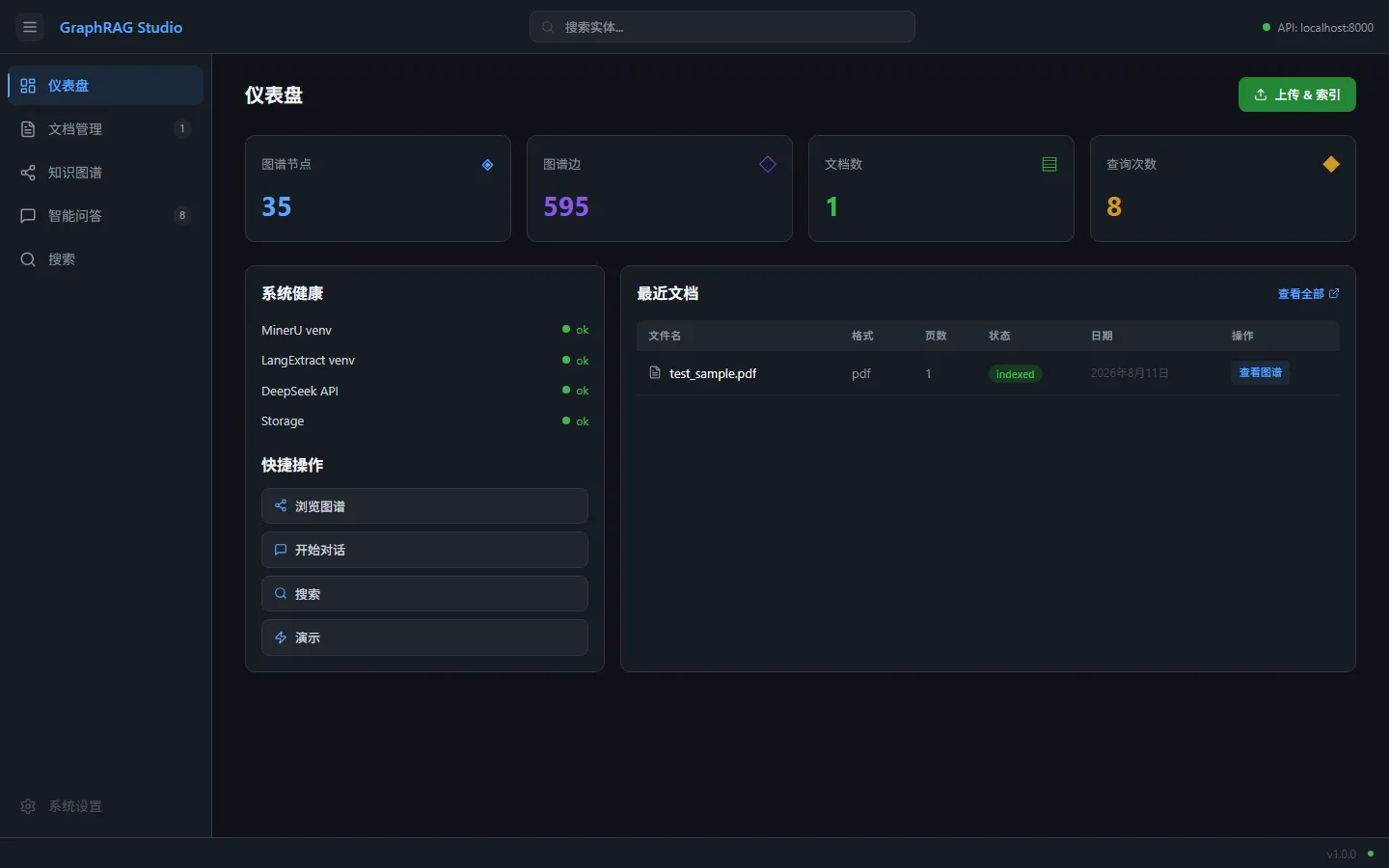
GraphRAGAgent is a local knowledge-exploration workspace for working with source documents. It assembles documents into traceable pages, extracts entities and relationships, and lets someone move between a graph, relationship paths, local subgraphs, and cited answers instead of starting every search from a text chunk.
Core capabilities
- Upload documents and track indexing
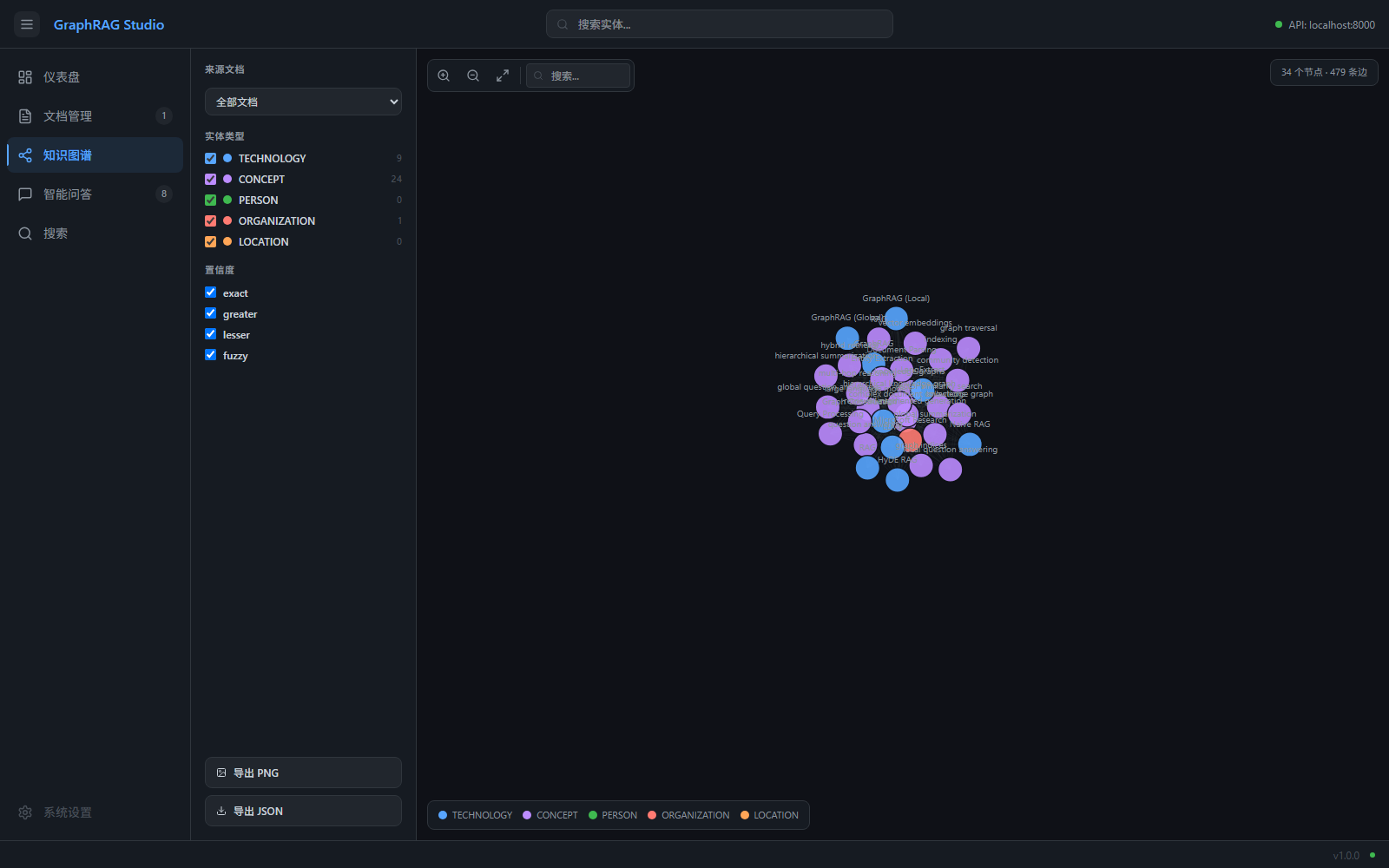
- Browse the entity graph and node details
- Search entities by name and type
- Find relationship paths between entities
- Search keyword-related subgraphs
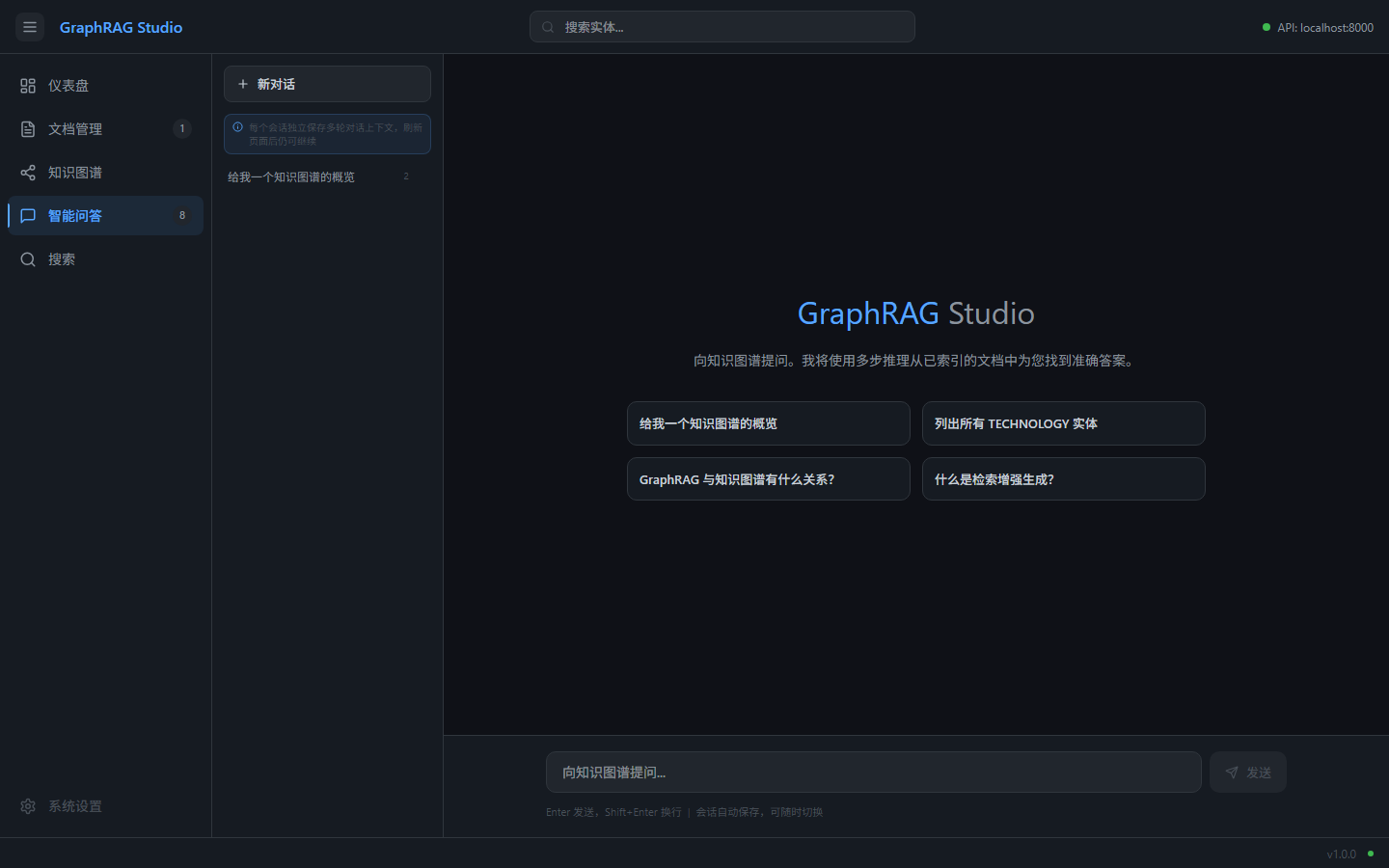
- Keep multi-turn sessions and return from cited nodes to the graph
How it works
- Upload documents and assemble pages
- Extract entities and build indexes
- Browse the graph and query relationships
- Ask questions and return to cited nodes
The workspace first assembles page content from uploaded documents, then uses LangExtract to extract entities and relationships; the indexing flow merges those results into a global NetworkX graph while writing a Chroma vector index. Someone can then browse nodes in the D3 graph, query relationships or local subgraphs, and use the QA tools to add source semantics and inspect citations.
Project highlights
Turn documents into an explorable graph
The repository’s page assembly turns uploaded documents into processable content, and LangExtract extracts entities and relationships; the indexing stage merges each page’s results into a global NetworkX graph while also writing a Chroma vector index. One upload therefore creates an exploration path from pages to entities, relationships, and semantic retrieval.
Answer with relationships and source semantics
The QA tools retrieve entities, neighbors, paths, and vectors for a question: they locate relevant entities, add structural context through neighbors and relationship paths, and use vector retrieval to supply source semantics. The answer is therefore organized from relationship context and source meaning instead of relying on one text fragment.
Move continuously between graph exploration and chat
The D3 exploration, Ask AI, and cited entities in chat share the same nodes, so someone can open a question from a graph node and return from a cited node to inspect its neighbors and paths. Multi-turn sessions preserve that transition, keeping graph exploration and chat as connected entry points.
System architecture
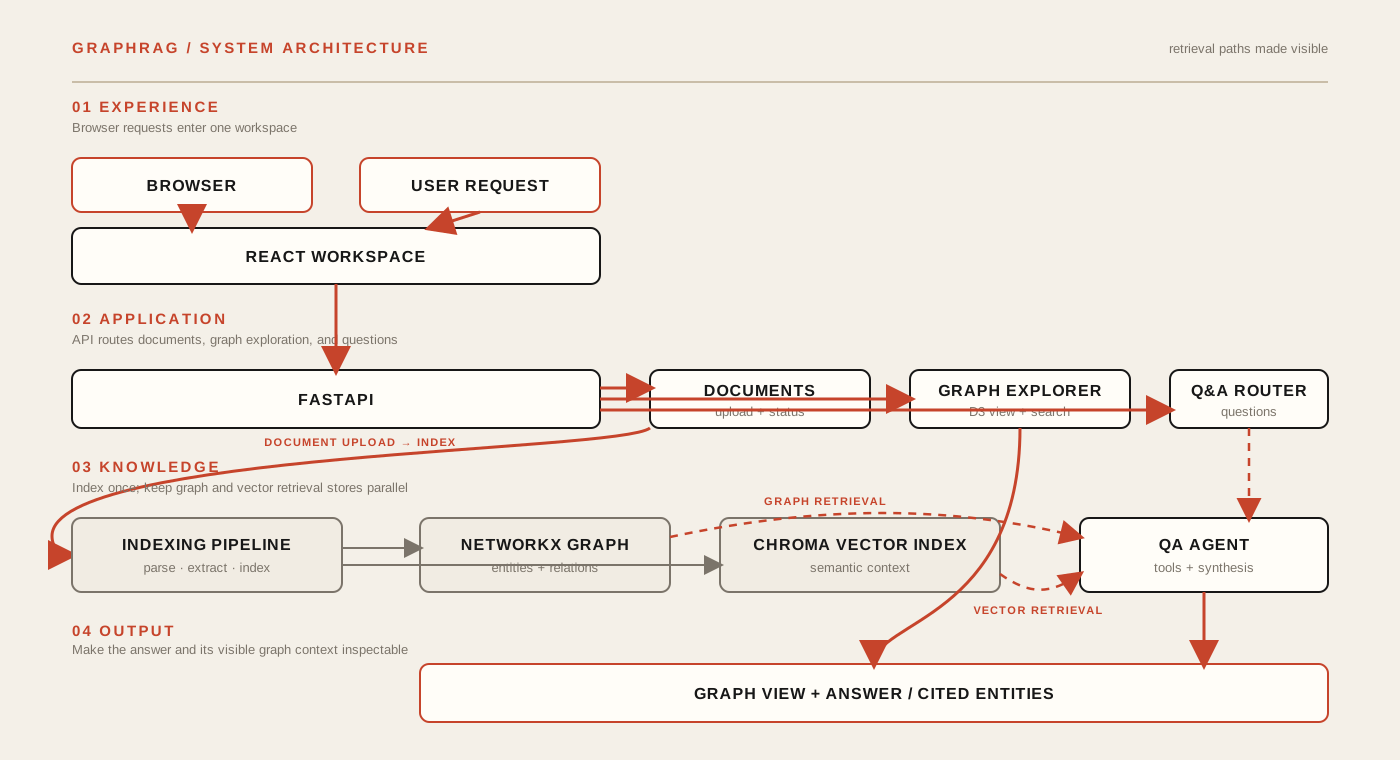
The React workspace sends document, graph, and question requests through FastAPI. The indexing pipeline turns material into a NetworkX graph and a Chroma vector index; the QA Agent then organizes both retrieval paths into answer and graph outputs.
Project scope
This project is a local-document knowledge exploration workbench combining graph construction, relationship search, and multi-turn Q&A. It does not provide multi-user collaboration, tenant isolation, or enterprise knowledge governance.