Data Platform
SQLAgent
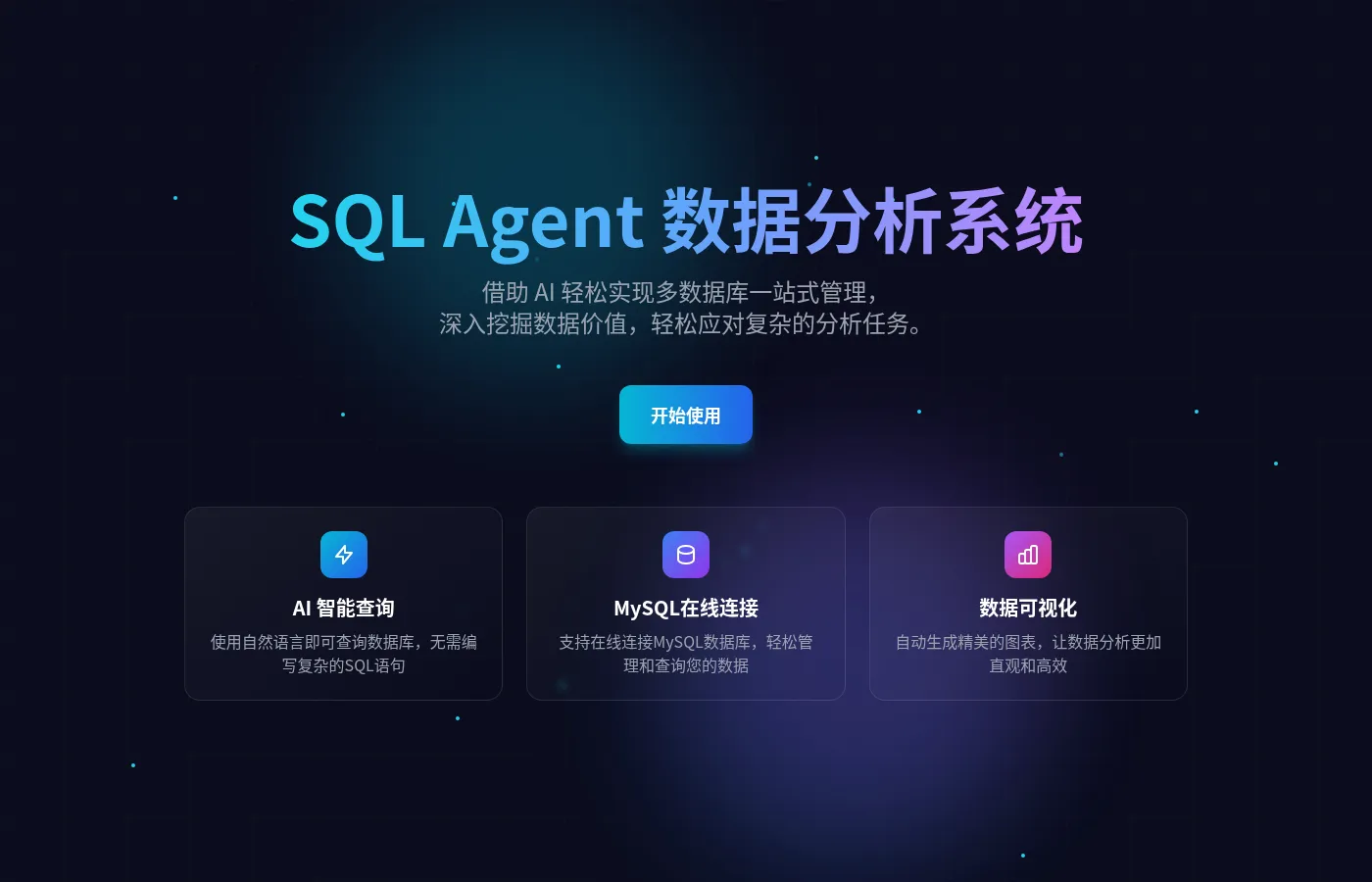
An analysis-delivery workflow that connects business context, observable query stages, and SQL, data, charts, and interpretation.
- Project scope
- Full-stack NL2SQL assistant
- Current status
- Completed
- My role
- Independent developer
Technology
- React
- FastAPI
- LangChain
- Vanna
- Milvus
- MySQL
- SSE
What it solves
Business data analysis is not only a matter of translating a question into SQL. The system also needs to understand the schema, business naming, and query habits of a known database, while making the analysis inspectable, traceable, and reusable. This workspace puts the natural-language question, three kinds of retrieved context, SQL, and multi-format results into one workflow so a user can follow the path from the question to SQL, data, charts, and written interpretation.
Core capabilities
- Query a business database in natural language
- Manage DDL, business documentation, and historical SQL examples
- Preserve multi-turn analysis context
- Generate, inspect, validate, and execute SQL
- Inspect data in a result table
- Generate charts and written analysis automatically
How it works
- Enter a natural-language question
- Retrieve context and generate SQL
- Validate and execute the query
- Inspect the table, chart, and answer
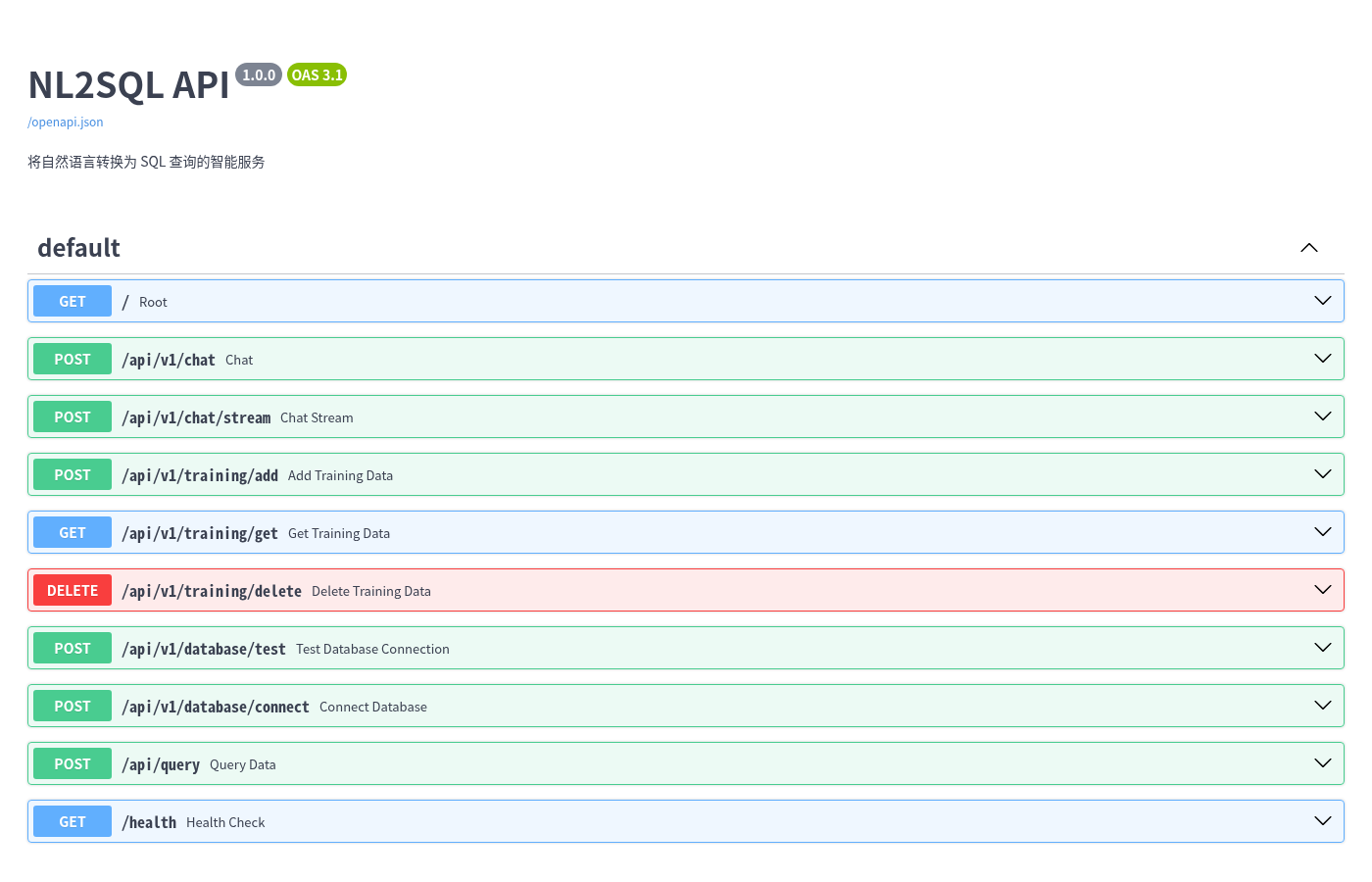
The user asks a question in the React workspace, and the system first retrieves DDL, business documentation, and historical SQL examples before generating a query for the known database. Retrieval hits, the SQL draft, validation feedback, execution status, and final interpretation return as observable stages; multi-turn analysis context is preserved so a follow-up can continue the same investigation.
Project highlights
Ground SQL in three kinds of context
The system treats DDL, business documentation, and historical SQL examples as separate context sources for structure, business semantics, and query conventions. Together they supplement the question before SQL generation, allowing the agent to use table structure and business naming rather than guess at fields; the CSV QA prototype remains a separate experiment.
Make every query stage observable
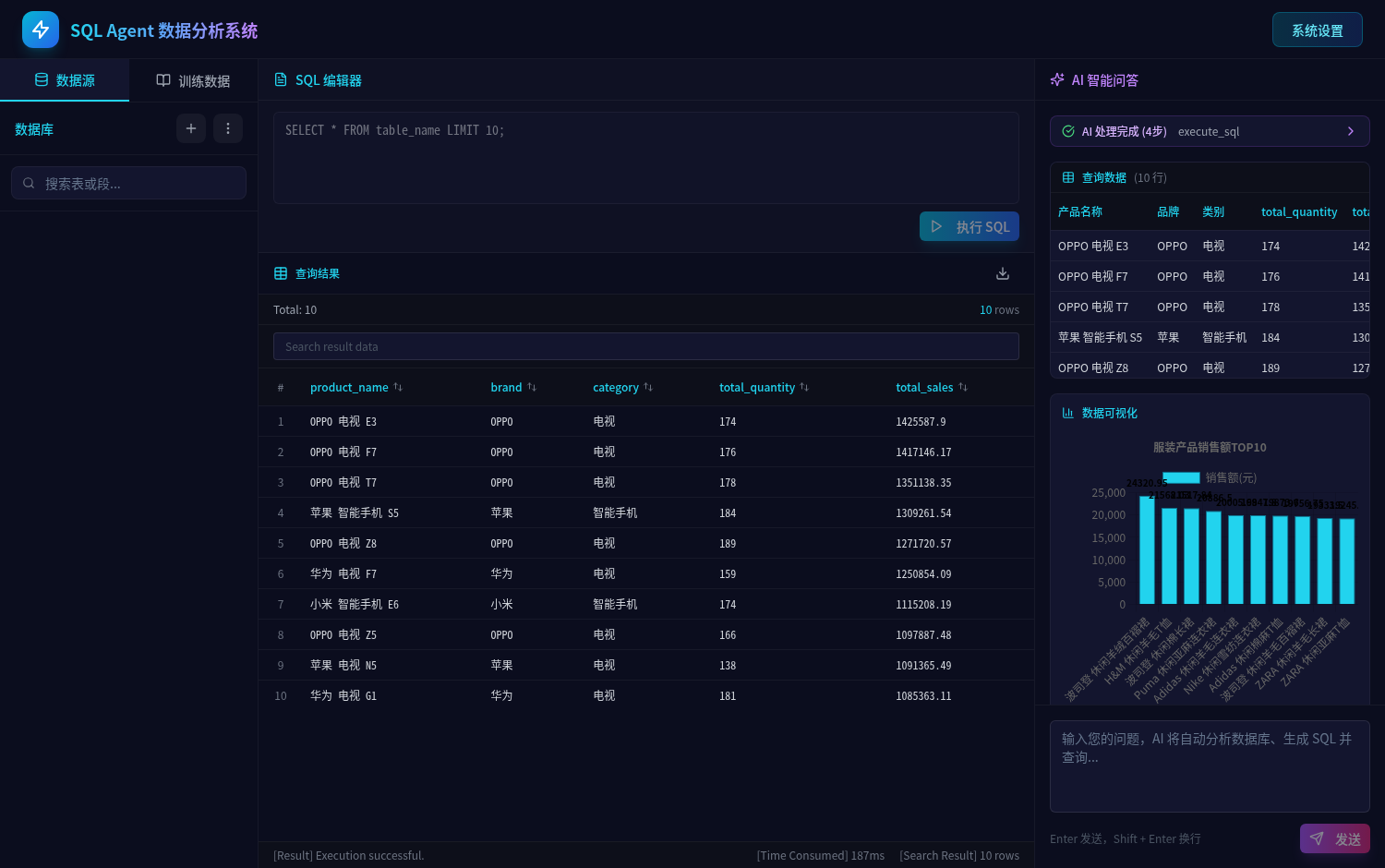
The workflow separates retrieval, generation, validation, execution, and interpretation into stages that can be inspected afterward. A user can see what context was retrieved, which SQL was generated, how validation responded, whether the query executed, and how the result was interpreted; when an answer is unexpected, the issue can be located in a concrete stage instead of hidden behind one opaque response.
Deliver SQL, data, charts, and interpretation together
After execution, the workspace keeps the generated SQL, result table, chart configuration, and written analysis together. A user can inspect the data first and then assess the conclusion through the chart and interpretation; SSE returns intermediate stages and results so a natural-language question becomes a complete, inspectable delivery.
System architecture
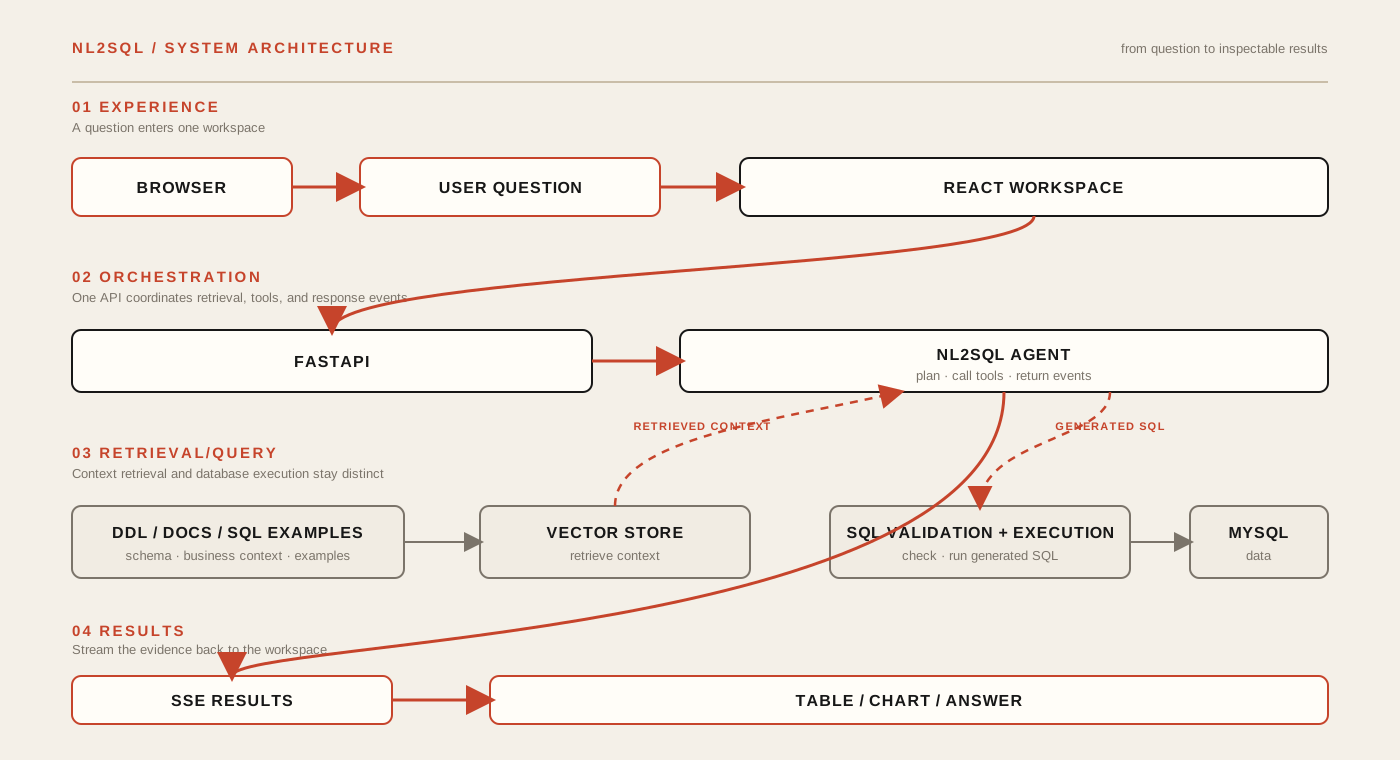
The React workspace connects through FastAPI to the NL2SQL Agent. The agent obtains context from a vector store containing DDL, business documentation, and historical SQL examples, then calls SQL validation and execution tools against MySQL; SSE returns intermediate steps and results to the page, where SQL, table, chart, and written analysis meet. Database permissions, an SQL sandbox, and final human review are not guaranteed by this application path alone and remain external safeguards in the deployment environment.
Project scope
This is an assistant for a known database, not a claim of generalized NL2SQL capability across arbitrary databases or natural-language requests. The screenshots use demo or synthetic data and do not imply an accuracy metric; CSV QA is outside the principal path. Database permissions, sandboxing, and human review remain external safeguards that must be supplied by the deployment environment and operating process.